نقش طبقه متوسط در تحولات سیاسی ایران از منظرساموئل هانتینگتون و کارل دویچ
کلمات کلیدی:
نقش طبقه متوسط, تحولات سیاسی ایران, ساموئل هانتینگتون , کارل دویچچکیده
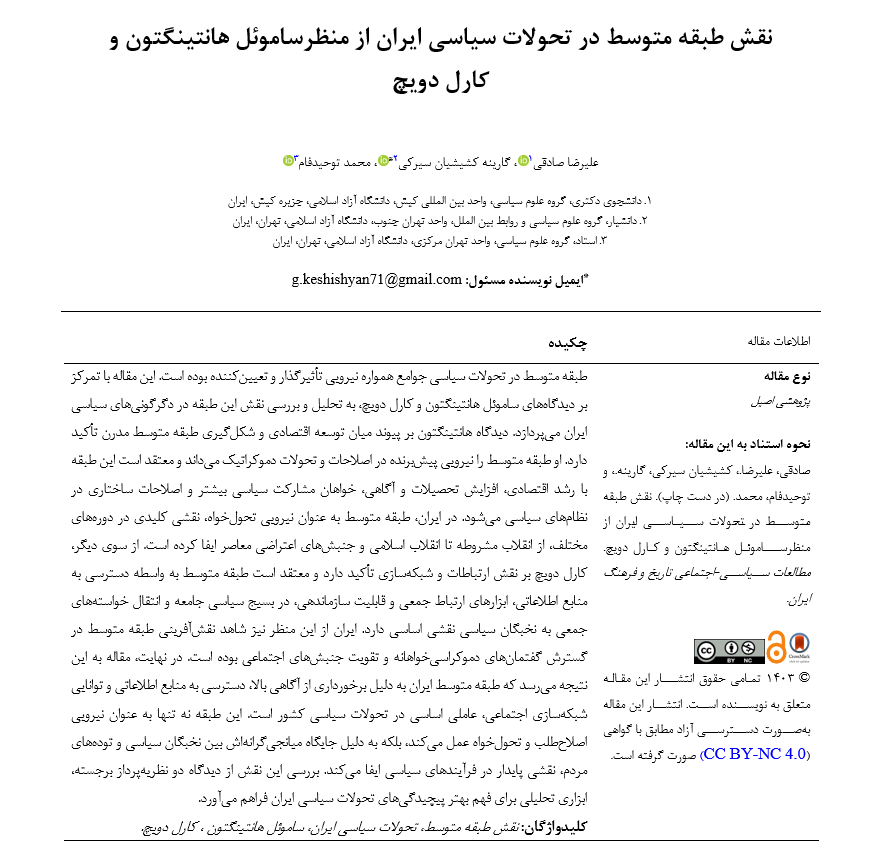
طبقه متوسط در تحولات سیاسی جوامع همواره نیرویی تأثیرگذار و تعیینکننده بوده است. این مقاله با تمرکز بر دیدگاههای ساموئل هانتینگتون و کارل دویچ، به تحلیل و بررسی نقش این طبقه در دگرگونیهای سیاسی ایران میپردازد. دیدگاه هانتینگتون بر پیوند میان توسعه اقتصادی و شکلگیری طبقه متوسط مدرن تأکید دارد. او طبقه متوسط را نیرویی پیشبرنده در اصلاحات و تحولات دموکراتیک میداند و معتقد است این طبقه با رشد اقتصادی، افزایش تحصیلات و آگاهی، خواهان مشارکت سیاسی بیشتر و اصلاحات ساختاری در نظامهای سیاسی میشود. در ایران، طبقه متوسط به عنوان نیرویی تحولخواه، نقشی کلیدی در دورههای مختلف، از انقلاب مشروطه تا انقلاب اسلامی و جنبشهای اعتراضی معاصر ایفا کرده است. از سوی دیگر، کارل دویچ بر نقش ارتباطات و شبکهسازی تأکید دارد و معتقد است طبقه متوسط به واسطه دسترسی به منابع اطلاعاتی، ابزارهای ارتباط جمعی و قابلیت سازماندهی، در بسیج سیاسی جامعه و انتقال خواستههای جمعی به نخبگان سیاسی نقشی اساسی دارد. ایران از این منظر نیز شاهد نقشآفرینی طبقه متوسط در گسترش گفتمانهای دموکراسیخواهانه و تقویت جنبشهای اجتماعی بوده است. در نهایت، مقاله به این نتیجه میرسد که طبقه متوسط ایران به دلیل برخورداری از آگاهی بالا، دسترسی به منابع اطلاعاتی و توانایی شبکهسازی اجتماعی، عاملی اساسی در تحولات سیاسی کشور است. این طبقه نه تنها به عنوان نیرویی اصلاحطلب و تحولخواه عمل میکند، بلکه به دلیل جایگاه میانجیگرانهاش بین نخبگان سیاسی و تودههای مردم، نقشی پایدار در فرآیندهای سیاسی ایفا میکند. بررسی این نقش از دیدگاه دو نظریهپرداز برجسته، ابزاری تحلیلی برای فهم بهتر پیچیدگیهای تحولات سیاسی ایران فراهم میآورد.
دانلودها
مراجع
Deutsch, K. W. (1963). The Nerves of Government: Models of Political Communication and Control. New York: Free Press.
Huntington, S. P. (1968). Political Order in Changing Societies. New Haven: Yale University Press.
Huntington, S. P. (1991). The Third Wave: Democratization in the Late 20th Century. Norman: University of Oklahoma Press.
Kanchloo, N., Najafi, L., & Lotfi, M. (2022). Analysis and examination of Iran's geopolitical position in energy resource transfer plans (regional planning). Journal of Regional Studies, 12(46), 848-879.
Katouzian, H. (2009). The Persians: Ancient, Mediaeval and Modern Iran. New Haven & London: Yale University Press.
Taheri, A., & Farahmand, B. (2015). The role of the middle class in Iran's political transformations from the perspective of Karl Deutsch. Specialized Journal of Political Science, 10(29), 139-181.
Yadegari, L. (2009). The role of the middle class in Iran's political transformations from the perspective of Samuel Huntington (considering the increasing power of the United States in the region). Central Asian and Caucasian Studies, 68(1), 59-78.
دانلود
گاهشمار انتشار
- ارسال
- بازنگری
- پذیرش
شماره
نوع مقاله
مجوز
حق نشر 2025 علیرضا صادقی, گارینه کشیشیان سیرکی, محمد توحیدفام (نویسنده)

این پروژه تحت مجوز بین المللی Creative Commons Attribution-NonCommercial 4.0 می باشد.