The Economic System of Khoy Bazaar and Guilds During the Safavid Era
DOI:
https://doi.org/10.61838/kman.jspsich.2.4.24Abstract
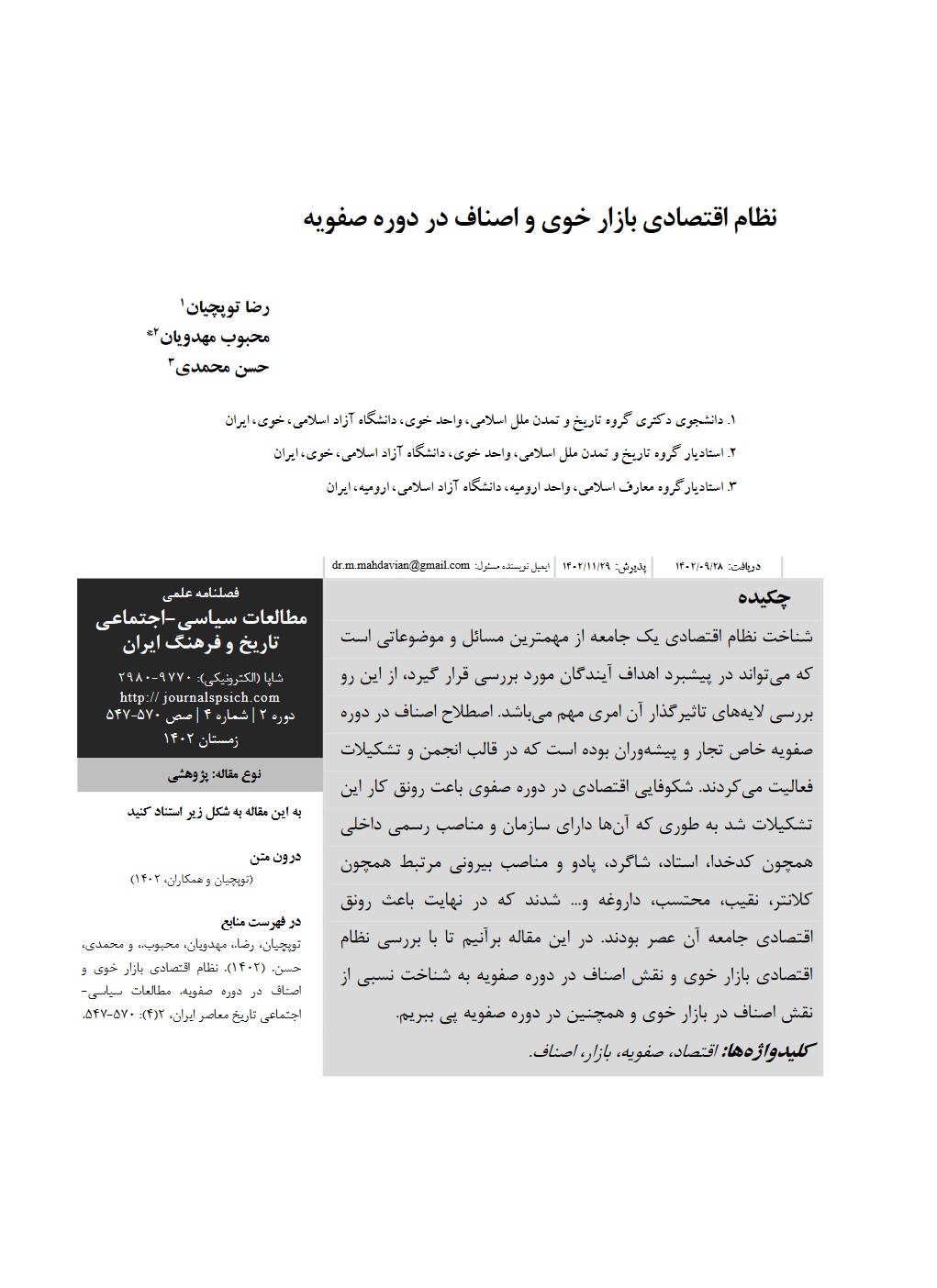
Understanding the economic system of a society is among the most critical issues that can be studied to advance the goals of future generations. Thus, examining its influential layers is of great importance. The term "guilds" during the Safavid period specifically referred to merchants and artisans who operated within associations and organizations. Economic prosperity in the Safavid era led to the flourishing of these organizations to such an extent that they possessed internal official positions such as Kadkhoda (headman), Ostad (master), Shagerd (apprentice), and Pado (assistant), as well as external roles such as Kalantar (supervisor), Naqib (inspector), Mohtasib (market supervisor), and Darugha (chief of police). These structures ultimately contributed to the economic prosperity of the society at that time. This article aims to investigate the economic system of the Khoy Bazaar and the role of guilds during the Safavid period, providing a relative understanding of the guilds' influence on the Khoy Bazaar and in the broader context of the Safavid era.
Downloads
Downloads
Publication Timeline
- Submitted
- Revised
- Accepted