تحلیل کیفی اسنادی پیامدهای رسانههای نوین و جنگ شناختی بر رفتار سیاسی نسل جوان
کلمات کلیدی:
رسانههای نوین, جنگ شناختی, رفتار سیاسی, نسل جوان, تحلیل کیفی اسنادی, سواد رسانهایچکیده
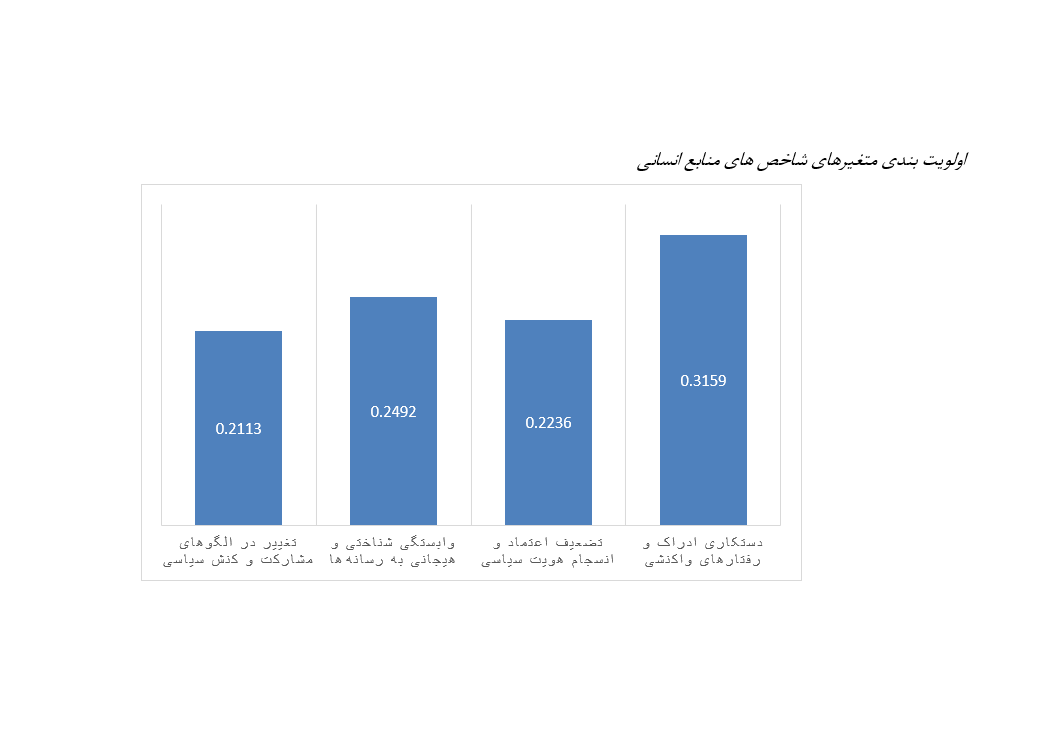
پژوهش حاضر با هدف تحلیل و اولویتبندی پیامدهای رسانههای نوین و جنگ شناختی بر رفتار سیاسی نسل جوان و تبیین سازوکارهای شناختی، هیجانی و سیاسی ناشی از تعامل این دو عامل انجام شد. این پژوهش از نظر هدف کاربردی و از نظر رویکرد، کیفی و مبتنی بر تحلیل اسنادی و تحلیل محتوا بود. دادههای پژوهش از طریق بررسی منابع علمی، مقالات، گزارشها و مطالعات مرتبط داخلی و خارجی گردآوری و با استفاده از کدگذاری باز، مقولهبندی و کدگذاری محوری تحلیل شدند. تحلیل دادههای کیفی و استخراج کدها و مضامین با استفاده از نرمافزار MAXQDA انجام شد. اعتبار یافتهها بر اساس معیارهای لینکلن و گوبا شامل قابلیت انتقال، اعتبار، تأییدپذیری و اعتمادپذیری بررسی شد و پایایی کدگذاری با روش توافق درونی ارزیابی گردید. در مرحله نهایی، برای تعیین اهمیت نسبی پیامدهای اصلی از فرایند تحلیل سلسلهمراتبی فازی استفاده شد. نتایج تحلیلی نشان داد چهار پیامد کلان شامل دستکاری ادراک و رفتارهای واکنشی، وابستگی شناختی و هیجانی به رسانهها، تضعیف اعتماد و انسجام هویت سیاسی، و تغییر در الگوهای مشارکت و کنش سیاسی، ساختار اصلی تأثیر رسانههای نوین و جنگ شناختی بر رفتار سیاسی نسل جوان را تشکیل میدهند. بر اساس اوزان نهایی، دستکاری ادراک و رفتارهای واکنشی با وزن 0.3159 بالاترین اهمیت را داشت و پس از آن وابستگی شناختی و هیجانی به رسانهها با وزن 0.2492، تضعیف اعتماد و انسجام هویت سیاسی با وزن 0.2236 و تغییر در الگوهای مشارکت و کنش سیاسی با وزن 0.2113 قرار گرفتند. این الگو نشان میدهد اثرگذاری شناختی و هیجانی بیش از تغییر صرف در شکل مشارکت سیاسی، در بازآرایی رفتار سیاسی نسل جوان نقش دارد. رسانههای نوین و جنگ شناختی در تعامل با یکدیگر میتوانند رفتار سیاسی نسل جوان را به سوی وابستگی شناختی، هیجانیشدن، کاهش اعتماد سیاسی و کنشهای واکنشی سوق دهند؛ ازاینرو، توسعه سواد رسانهای، تقویت تفکر انتقادی و ارتقای تابآوری شناختی باید در کانون سیاستهای آموزشی و رسانهای مرتبط با جوانان قرار گیرد.
دانلودها
مراجع
Abou Karam, S. (2023). Social media and the youth activism: The case of Generation Z in Iran. Rasānah / Journal for Iranian Studies.
Abouli, A., Haghighi, A. M., & Zarei, G. (2022). The effect of virtual social networks on the political behavior of Iranian citizens (2008–2018). Geography (Regional Planning), 12(46), 713-732. https://doi.org/10.22034/jgeoq.2022.318871.3462
Adams, Z., & Adams, Z. (2023). (Why) Is misinformation a problem? International Journal of Communication and Information Studies.
Adeeb, R. A., & Mirhoseini, M. (2023). The impact of affect on the perception of fake news on social media: A systematic review. Social Sciences, 12(12), 674.
Ahmadpour Torkmani, B., AzKia, M., & Sarokhani, B. (2020). The role of virtual social networks in the political socialization of youth: Emphasis on media access and active users. Media Studies, 13(41), 21-39.
Alodat, A. M. (2023). Social media platforms and political participation: A study of Jordanian youth. Social Sciences, 12(7), 402.
Arayankalam, J. (2021). Relating foreign disinformation through social media to offline violence. Technological Forecasting and Social Change.
Arrazak, M., & Adnan, M. (2025). The influence of social media usage and political trust on young voters political participation in Padang City. Jurnal ISO: Jurnal Ilmu Sosial, Politik Dan Humaniora, 5(1), 11. https://doi.org/10.53697/iso.v5i1.2160
Asghar, N., Cheema, A. T., & Muzaffar, M. (2025). The impact of media coverage on political behavior among Pakistani students: A case study of GC Women University Sialkot. Journal of Development and Social Sciences, 6(2), 266-279. https://doi.org/10.47205/jdss.2025(6-II)23
Barati, M. (2023). Casual social media use among the youth: Effects on political participation. JeDEM — Journal of e-Democracy and Open Government.
Behrouzi, E. (2025). The impact of social media on political behavior and civic participation in contemporary societies. Seventh International and Eighth National Conference on Law and Political Science,
Bohn, R. (2024). Impact and effects of informational social media use on political expression
Conde, J. (2025). The emergence of cognitive intelligence (COGINT) as a framework for modern information operations. Journal of Information Warfare.
Deppe, C., & Schaal, G. S. (2024). Cognitive warfare: A conceptual analysis of the NATO ACT cognitive warfare exploratory concept. Frontiers in Big Data, 7, 1452129. https://doi.org/10.3389/fdata.2024.1452129
Eraqi, A., Bidgoli, M., & Rajabi Deh Borzoui, A. (2022). Examining the objectives of enemy cognitive warfare and resilience strategies for countering it with emphasis on Quranic teachings. Sacred Defense Studies, 8(4), 143-162.
Fakouri Rava, H., Ghasemi, H., Aghayan, J., & Ghorbanzadeh Savar, G. (2024). Countering cognitive warfare in Islamic governance: The strategic role of explanatory jihad in the thought of the Supreme Leader. Governance Principles, 2(4), e726722. https://doi.org/10.22034/ah.2025.2062780.1051
Ghorbani, A. (2025). Social capital created for Iran during the twelve-day war with the Zionist regime.
Golafshannia, S., Khosravi, M., Mortazavian, S. A., & Bakhshayesh Ardestani, A. (2025). The role of cyberspace in political activism and electoral participation among young people born in the 1990s: An analysis of changing patterns of political and social participation. Political-Social Studies of Iranian History and Culture, 4(3), 1-13. https://journalspsich.com/index.php/journalspsich/article/view/394
Hansen, T., Taylor, C. K., & Knowles, R. T. (2025). Digital media and political engagement: Shaping youth environmental attitudes and behaviors in four European societies. Societies, 15(11), 300. https://doi.org/10.3390/soc15110300
Iqbal, A., Hassan, S., & Mayo, A. M. (2024). Impact of social media use on voting behavior of youth during general elections-2013. Journal of Social Signs Review, 2(4), 569-593. https://socialsignsreivew.com/index.php/12/article/view/63
Jangizehi, S., Jangidad, N., & Jangizehi, P. (2024). Analysis of the impact of popular culture on political behavior: A study of the younger generation. Second International Conference on New Research in Education,
Jia, N., & Lee, Y. F. (2025). The influence of social media content on political identity with corruption perception as a moderator. Frontiers in Political Science, 7. https://doi.org/10.3389/fpos.2025.1659804
Kanaaninassab, S., Motaghi, E., Roshanayi, A., Shekarbeigi, A., & Mirzaei, K. (2020). A sociological study of the effect of lifestyle on students’ political participation: The case of Razi University students in Kermanshah.
Khan, M. Q., & Fatima, B. (2025). Exploring digital democracy in Pakistan: The impacts of social media on political participation among university students.
Kops, M. (2025). Young people and false information: A scoping review of research on youth responses to misinformation. Journal of Communication Research.
Marjanović, A., & Smiljanic, D. (2025). Cognitive warfare - the human mind as the new battlefield.
Matthes, J. (2022). Social media and the political engagement of young adults: Theoretical perspectives and empirical findings. Online Media & Government Communication.
Mohammadi Fateh, A., Arvand, H., & Jokar, A. (2024). A reflection on the theoretical foundations of cognitive warfare based on metasynthesis. Strategic Management Perspective, 2(4), 71-118.
Mousavi, S. M. (2025). Foundations and strategies for countering cognitive warfare in Islamic governance.
Mueller, J. C. (2025). Youth politics and cognitive mapping in the United States: From #OKBoomer to #BlackLivesMatter and #CeasefireNow. Peace Review, 37(1), 217-234. https://doi.org/10.1080/10402659.2025.2456169
Nguyen, T. T., Nguyen, D. C., Nguyen, H. T., Do, H. T., Ngo, T., Pham, A. B. G., Tran, T. Q., Hoang, L. P., Dang, H., Boyer, L., Fond, G., Auquier, P., & Zhang, M. W. B. (2025). Exposure to fake news on social media, coping mechanisms, and mental health impact among Vietnamese adolescents and young adults. Scientific reports, 15, 35117.
Nyianle, J. B. M. (2025). Social media and political participation among youth in African democracies. Journal of African Social Development.
Osmani, B. (2025). Psychological impact of political populism in internet media: A study of perceptions among youth in North Macedonia. https://ssrn.com/abstract=5287929
Paziuk, A., Lande, D., Shnurko-Tabakova, E., & Kingston, P. (2025). Decoding manipulative narratives in cognitive warfare: a case study of the Russia-Ukraine conflict. Frontiers in Artificial Intelligence, 8, 1566022. https://doi.org/10.3389/frai.2025.1566022
Political Information Literacy Working, G. (2023). Conceptualizing political information literacy among young people. Journal of Information, Communication & Society.
Qosja, I. (2022). The impact of social media on youth political behavior. Polis, 21, 14-22. https://doi.org/10.58944/njtx1623
Qosja, I. (2023). The impact of social media on youth political behavior. UET Political Science Journal.
Rezaei, D., & Ebrahimi, H. (2024). Identifying factors, challenges, and strategies for countering cognitive warfare with a focus on Generation Z in Iran. Air Defense Management, 3(2), 27-42.
Sabzevari, A. H., Dastmard, S. R., Shokouhi, A. R., Heydarizadeh, Y., Naghdi, M. H., & Khosravi, M. R. (2025). Analysis of the role of media and social networks in hybrid warfare.
Santos, M., Naranjo-Zolotov, M., Nguyen Long, L. A., Acedo, A., Ashofteh, A., & Aparício, M. (2025). Beyond social norms: Exploring the drivers of youth’s political participation via social media. Emerging Science Journal, 9(2), 588-602. https://doi.org/10.28991/ESJ-2025-09-02-05
Sardarnia, K., Aminizadeh, S., & Hasanvand, M. (2019). The effect of new media on students’ political participation through social variables: The case of Shiraz University students. Applied Sociology, 30(2), 85-100. https://doi.org/10.22108/jas.2018.109527.1307
Solihat, M. (2024). Gen Z communication and political participation in digital environments. International Conference on Social Science,
Tavassoli Tabaei Zavareh, S. A. (2023). Explaining the components of cognitive warfare in Ayatollah Khamenei’s political thought. Journal of Social and Political Cognitive Studies, 1(1), 24-41.
Vasist, P. N. (2023). The polarizing impact of political disinformation and hate: A cross-country investigation. Humanities and Social Sciences Communications.
Venus, A., Intyaswati, D., Ayuningtyas, F., & Lestari, P. (2025). Political participation in the digital age: Impact of influencers and advertising on Generation Z. Cogent Arts & Humanities, 12(1). https://doi.org/10.1080/23311983.2025.2520063
Wan Husin, W. N., & Zainurin, S. (2025). The role of social media in influencing youth political behavior: A systematic literature review. Pakistan Journal of Life and Social Sciences, 22. https://doi.org/10.57239/PJLSS-2024-22.2.001763
دانلودها
گاهشمار انتشار
- ارسال
- بازنگری
- پذیرش
شماره
نوع مقاله
مجوز
حق نشر 2026 Mohammad Raja Parniyan (Author); Ghaffar Zarei (Corresponding Author); Amin Ravanbod (Author)

این پروژه تحت مجوز بین المللی Creative Commons Attribution-NonCommercial 4.0 می باشد.