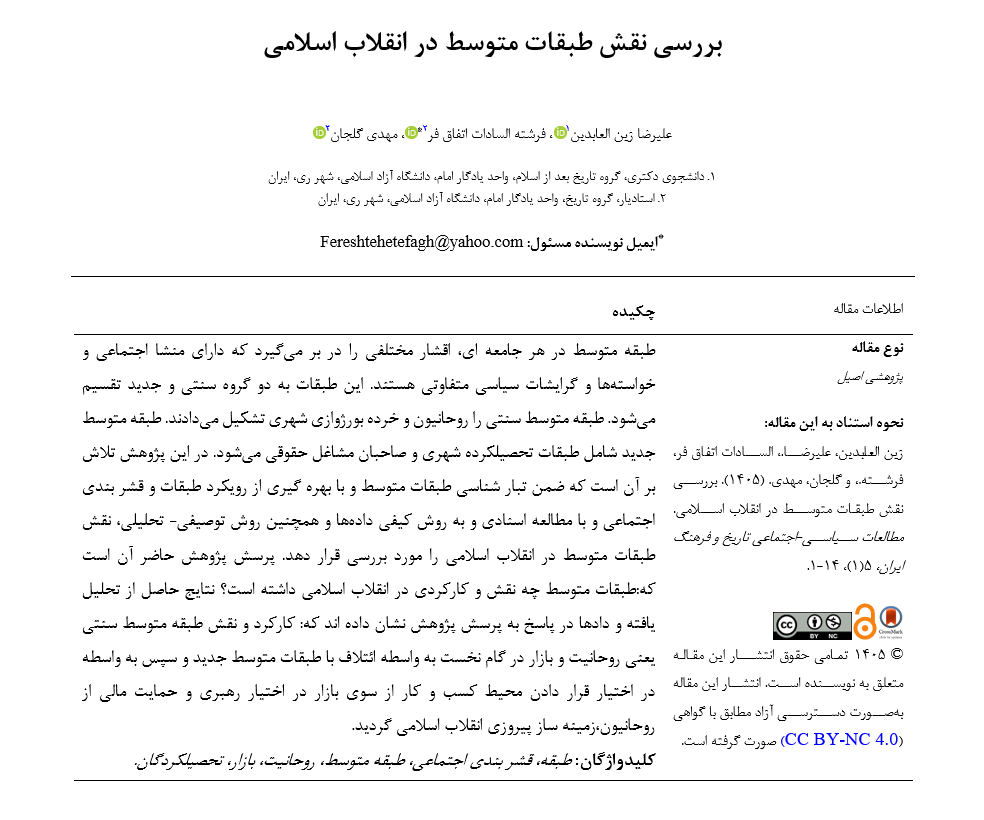
بررسی نقش طبقات متوسط در انقلاب اسلامی
DOI::
https://doi.org/10.61838/kman.jspsich.369کلمات کلیدی:
طبقه اجتماعی, قشر بندی اجتماعی, طبقه متوسط, روحانیت, بازار, تحصیلکردگانچکیده
طبقه متوسط در هر جامعه ای، اقشار مختلفی را در بر میگیرد که دارای منشا اجتماعی و خواستهها و گرایشات سیاسی متفاوتی هستند. این طبقات به دو گروه سنتی و جدید تقسیم میشود. طبقه متوسط سنتی را روحانیون و خرده بورژوازی شهری تشکیل میدادند. طبقه متوسط جدید شامل طبقات تحصیلکرده شهری و صاحبان مشاغل حقوقی میشود. در این پژوهش تلاش بر آن است که ضمن تبار شناسی طبقات متوسط و با بهره گیری از رویکرد طبقات و قشر بندی اجتماعی و با مطالعه اسنادی و به روش کیفی دادهها و همچنین روش توصیفی- تحلیلی، نقش طبقات متوسط در انقلاب اسلامی را مورد بررسی قرار دهد. پرسش پژوهش حاضر آن است که:طبقات متوسط چه نقش و کارکردی در انقلاب اسلامی داشته است؟ نتایج حاصل از تحلیل یافته و دادها در پاسخ به پرسش پژوهش نشان داده اند که: کارکرد و نقش طبقه متوسط سنتی یعنی روحانیت و بازار در گام نخست به واسطه ائتلاف با طبقات متوسط جدید و سپس به واسطه در اختیار قرار دادن محیط کسب و کار از سوی بازار در اختیار رهبری و حمایت مالی از روحانیون،زمینه ساز پیروزی انقلاب اسلامی گردید.
دانلودها
مراجع
Ārāstehkhū, M. (2002). Naqd va Negāresh bar Farhang-e Iṣṭilāhāt-e Ejtemā'i (Critique and Perspective on the Dictionary of Social Terms). Chāpakhsh Publications.
Ashraf, A. (1993). The Social Context of Traditionalism and Modernism. Iran Nameh Journal, 15(2).
Ashraf, A., & Banuazizi, A. (1992). Social Classes in the Pahlavi Period. Rahbord Journal, 2(2).
Azghandi, A. (2006). Dar Āmadi bar Jāme'e Shenāsi-ye Siyāsi-ye Irān (An Introduction to the Political Sociology of Iran). Ghumes Publishing.
Biro, A. (2001). Farhang-e Olum-e Ejtemā'i (Dictionary of Social Sciences). Kayhan Publications.
Cohen, B. (1994). Mabāni-ye Jāme'e Shenāsi (Fundamentals of Sociology). SAMT Publications.
Enāyat, H. (1992). Iran's Revolution in 1979: Religion as a Political Ideology. Farhang-e Towse'e Quarterly, 1(3).
Fūran, J. (2004). Moqāvemat-e Shekanandeh: Tārikh-e Tahavvolāt-e Ejtemā'i-ye Irān (Fragile Resistance: A History of Social Transformations in Iran). Rasā Cultural Services Institute Publications.
Giddens, A. (1997). Jāme'e Shenāsi (Sociology). Ney Publications.
Mo'addel, M. (2003). Ṭabaqeh, Siyāsat, va Idé'oloji dar Enqelāb-e Eslāmi (Class, Politics, and Ideology in the Islamic Revolution). Center for Re-identification of Iran and Islam.
Rafī'pūr, F. (1998). Anatomy of Society: An Introduction to Applied Sociology. Kāveh Publications.
Ranāni, M. (1997). Bāzār va Yā Nā-Bāzār (Market or Non-Market). Plan and Budget Organization.
Rubin, B. (1984). Jang-e Qodrathā dar Irān (Paved with Good Intentions: The American Experience in Iran). Āshtiyāni Publications.
Saqafi, M. (2016). Ṭabaqeh-ye Motavaseṭ dar Nazariyeh-ye Ejtemā'i-ye Mo'āser (The Middle Class in Contemporary Social Theory). Research Institute of Culture, Art, and Communication.
Shāyānméhr, A. (1998). Dā'irat al-Ma'ārif-e Taṭbīqi-ye Olum-e Ejtemā'i (Comparative Encyclopedia of Social Sciences) (Vol. 1). Kayhan Publications.
Tavakoli, A. (2001). Kāmyābīhā va Nākāmihā-ye Bāzār-Dowlat (Successes and Failures of the Market-State). SAMT Publications.
Tavassoli, G. (2006). Nazariyehā-ye Jāme'e Shenāsi (Sociological Theories). SAMT Publications.
دانلود
گاهشمار انتشار
- ارسال
- بازنگری
- پذیرش
شماره
نوع مقاله
مجوز
حق نشر 2026 Alireza ZeinalAbedin, Fereshteh Sadat Etefaghfar, Mehdi Goljan (Author)

این پروژه تحت مجوز بین المللی Creative Commons Attribution-NonCommercial 4.0 می باشد.